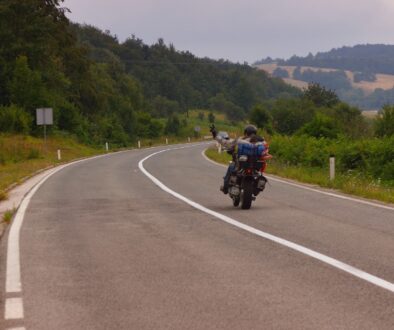

How Motorcycle Accident Claims Work In Wisconsin
After a motorcycle crash, the insurance and legal process may begin before the injured rider has a clear picture of the injuries, medical treatment, time away from work, or how the collision occurred.
That uncertainty matters. Motorcycle accident claims involve many of the same Wisconsin negligence and insurance rules that apply to other motor vehicle crashes, but the investigation often looks different. Motorcycle damage, rider injuries, witness accounts, road evidence, insurance coverage, and disagreements about fault may all affect how the claim develops.
Wisconsin Department of Transportation data shows why these claims deserve attention. WisDOT recorded 1,973 motorcycle crashes in 2025, with 1,558 motorcyclists injured and 92 killed.
For riders and families in La Crosse, Sparta, Onalaska, and throughout Western Wisconsin, understanding how a motorcycle accident claim works provides a clearer sense of what happens after the initial crash and which questions may become important.
How Does A Wisconsin Motorcycle Accident Claim Begin?
A motorcycle accident claim generally begins with an investigation into what happened, who may be responsible, which insurance policies apply, and how the crash affected the injured person.
The first stages often involve gathering information from law enforcement, insurance companies, medical providers, witnesses, and the people involved in the collision.
An injured rider may also begin receiving calls or requests from insurance adjusters soon after the accident. At the same time, medical treatment may still be underway and the long-term effects of the injuries may not yet be known.
This is one reason a motorcycle accident claim usually develops over time rather than being fully evaluated immediately after the collision.
The process may involve an insurance claim, settlement negotiations, and, in some situations, litigation. The appropriate path depends on the evidence, injuries, insurance coverage, and disputed legal issues.
What Evidence Matters In A Motorcycle Accident Claim?
Evidence helps establish how the motorcycle crash occurred and how the injuries affected the rider.
Because motorcycles offer less physical protection than passenger vehicles, a collision may cause serious injuries while leaving a different pattern of vehicle damage than a typical car crash. The motorcycle may also move, slide, or separate from the rider after impact, making photographs and other physical evidence important when reconstructing what happened.
Depending on the crash, useful evidence may include:
- Law enforcement crash reports
- Photographs or video of the motorcycle, other vehicles, roadway, debris, and injuries
- Witness statements and contact information
- Dash camera or nearby surveillance footage
- Motorcycle and vehicle damage
- Helmets and riding gear
- Vehicle electronic information when available
- Medical records and treatment documentation
- Employment and wage-loss records
- Repair estimates and property damage information
Evidence sometimes disappears or becomes harder to obtain as time passes. Vehicles may be repaired, video may be overwritten, and witnesses may become more difficult to locate.
A rider should never put personal safety at risk to gather evidence at the scene. Police reports, photographs taken by others, vehicle inspections, and other sources may provide information that was not safely available immediately after the collision.
Who May Be Responsible For A Wisconsin Motorcycle Accident?
Responsibility depends on how the crash happened.
Many motorcycle accidents involve another driver who fails to yield, turns across the motorcycle’s path, changes lanes without enough space, follows too closely, or drives while distracted.
Other crashes may involve several vehicles, commercial vehicles, employers, vehicle owners, or other parties whose actions contributed to the collision.
A common motorcycle scenario involves a vehicle turning left in front of an approaching rider. Another involves a driver changing lanes without recognizing that a motorcycle is already beside the vehicle.
The fact that a driver says, “I did not see the motorcycle,” does not by itself determine responsibility. The investigation may consider traffic signals, right-of-way rules, vehicle positioning, visibility, speed, witness statements, photographs, and other evidence.
Wisconsin negligence law ultimately focuses on the conduct of the people involved and whether that conduct contributed to the collision.
What If The Insurance Company Says The Rider Was Partly At Fault?
Wisconsin follows a comparative negligence system.
Under Wisconsin Statute § 895.045, an injured person is not automatically prevented from recovering damages simply because the person contributed to the accident. Recovery generally remains possible when the injured person’s negligence is not greater than the negligence of the person from whom recovery is sought. Any recovery is reduced according to the injured person’s percentage of negligence.
For example, an insurer might agree that another driver failed to yield but argue that the motorcycle was traveling too fast for the conditions. That disagreement could affect how the claim is evaluated.
Motorcycle riders sometimes encounter assumptions about speed, visibility, or risk-taking. Those assumptions should not replace evidence.
Police reports, witness accounts, photographs, video, vehicle damage, electronic information, and other evidence may provide a more complete picture of the collision.
When several people may share responsibility, Wisconsin’s comparative negligence rules require additional analysis because negligence is compared among the parties involved.
Which Insurance Coverage May Apply After A Motorcycle Accident?
Insurance coverage is often one of the most important parts of a motorcycle accident claim.
The responsible driver’s bodily injury liability insurance may provide coverage for injuries caused by the collision. The injured rider’s own motorcycle or automobile insurance may also become relevant depending on the policy and circumstances.
Wisconsin requires motorcycle operators to carry liability insurance. The minimum liability limits are $25,000 for injury or death to one person, $50,000 for injury or death to two or more people, and $10,000 for property damage.
Underinsured motorist coverage is different. Wisconsin does not require a policyholder to purchase underinsured motorist coverage, although insurers must provide notice of its availability. If purchased, the coverage may become relevant when the responsible driver’s liability limits are lower than the rider’s applicable underinsured motorist limits.
Depending on the circumstances, insurance questions may involve the at-fault driver’s liability policy, uninsured or underinsured motorist coverage, medical payments coverage, health insurance, or commercial insurance when a business vehicle was involved.
The declarations page provides useful information about coverage limits, but the full policy contains definitions, exclusions, conditions, and other terms that may affect whether coverage applies.
What Happens If The Other Driver Does Not Have Enough Insurance?
A serious motorcycle injury may result in medical expenses, lost income, and other losses that exceed the responsible driver’s liability insurance limits.
When this happens, the rider’s own insurance coverage may become important.
Uninsured motorist coverage generally addresses injuries caused by an uninsured or hit-and-run driver. Underinsured motorist coverage, when purchased, may provide additional protection when the at-fault driver has insurance but the applicable liability limits are lower than the injured person’s underinsured motorist coverage limits.
Other insurance policies may also require review depending on vehicle ownership, household relationships, employment, and how the accident occurred.
Coverage should not be assumed based only on the first insurance company involved. A complete claim review may require identifying every potentially applicable policy.
How Are Motorcycle Accident Injuries And Losses Documented?
A motorcycle accident claim involves more than determining who caused the crash.
The claim must also document how the injuries affected the rider financially, physically, and personally.
Depending on the circumstances, losses considered in a Wisconsin personal injury claim may include:
- Medical expenses
- Future medical care when supported by the evidence
- Lost income
- Reduced earning ability when applicable
- Motorcycle and other property damage
- Physical pain and suffering
- Permanent impairment or disability
- Scarring or disfigurement
- Loss of enjoyment of activities
- Other documented losses caused by the injury
The specific losses available depend on the facts and applicable Wisconsin law.
Medical records often play an important role because they document diagnoses, treatment, restrictions, symptoms, and recovery. Employment and wage records may establish time missed from work.
A serious injury may also affect responsibilities at home, recreational activities, mobility, and future plans. Those effects often become clearer as treatment progresses.
This is why evaluating a claim before the medical picture is understood may provide an incomplete view of the accident’s impact.
What Should You Know About Talking To Insurance Companies?
Insurance companies investigate motorcycle crashes to determine liability, coverage, and the amount they believe should be paid.
An adjuster may request information about the collision, injuries, medical treatment, prior medical history, property damage, or time away from work.
Accuracy matters. Riders should avoid guessing about facts they do not know or predicting how quickly an injury will heal while treatment is still underway.
A recorded statement requires additional consideration. A rider’s own policy may include cooperation requirements, while another driver’s insurer has a different relationship with the injured person.
Before providing a detailed recorded statement, understand who is requesting it and why.
The same principle applies to medical authorizations and settlement documents. Read the document and understand what information is being requested or what rights may be released.
How Does A Motorcycle Accident Settlement Work?
Many motorcycle injury claims are resolved through negotiation rather than a trial.
Settlement discussions typically occur after enough information has been collected to evaluate liability, insurance coverage, injuries, medical expenses, wage loss, and other effects of the crash.
An insurance company may make an early offer before medical treatment is complete. An early offer is not automatically appropriate or inappropriate. The important question is whether enough information exists to evaluate the proposed settlement.
A settlement normally requires the claimant to sign a release affecting further claims against the parties covered by the agreement.
Before resolving a claim, the rider should understand the injuries, expected medical needs, available insurance, and terms of the proposed release.
Bosshard Parke has additional information about factors to consider when deciding whether to accept or reject a personal injury settlement offer.
Does Every Motorcycle Accident Claim Go To Court?
No.
Many personal injury claims are resolved through insurance negotiations. Filing a lawsuit becomes one possible step when the parties cannot resolve disputes about responsibility, insurance, injuries, damages, or other legal issues.
If litigation becomes necessary, additional procedures may include written discovery, depositions, expert opinions, court hearings, mediation, and trial preparation.
The filing of a lawsuit also does not necessarily mean the case will ultimately be decided by a jury. Settlement discussions may continue while litigation is pending.
Every motorcycle accident claim follows its own path based on the evidence and disputed issues.
What Deadlines Apply To A Wisconsin Motorcycle Accident Claim?
Wisconsin Statute § 893.54 generally provides a three-year limitation period for personal injury actions arising from motor vehicle accidents.
That general rule does not govern every possible claim or procedural requirement.
Different deadlines or notice requirements may apply when a governmental entity is involved, when another state’s law applies, when a wrongful death occurs, or when another statute controls the claim. Insurance policies may also impose separate notice and cooperation requirements.
For that reason, the general three-year motor vehicle limitation period should not be treated as a universal deadline for every motorcycle accident situation.
There is also a practical difference between a legal filing deadline and preserving evidence. Video, vehicle data, witness information, and physical evidence may become unavailable well before a statute of limitations expires.
How Long Does A Wisconsin Motorcycle Accident Claim Take?
There is no standard timeline for every motorcycle accident claim.
A claim involving relatively straightforward fault and injuries that resolve quickly may progress differently from a claim involving surgery, permanent restrictions, disputed liability, multiple insurance policies, or litigation.
Factors affecting the timeline may include the length of medical treatment, availability of records, complexity of the accident investigation, insurance coverage disputes, settlement negotiations, and whether a lawsuit becomes necessary.
A longer claim does not necessarily mean something has gone wrong. In serious injury cases, understanding the medical prognosis and long-term effects may require time.
When Should You Speak With A Motorcycle Accident Attorney?
Not every motorcycle crash requires legal representation.
Speaking with an attorney may become more useful when injuries are serious or ongoing, fault is disputed, the insurance company blames the rider, several vehicles or policies are involved, the responsible driver lacks sufficient coverage, the rider has lost substantial time from work, or an insurer requests a settlement before the medical condition is fully understood.
An attorney can review the available evidence, insurance policies, medical documentation, potential responsibility, and procedural requirements.
Bosshard Parke’s Personal Injury practice includes representation for people injured in motor vehicle accidents throughout La Crosse, Sparta, and Western Wisconsin. Attorney Howard J. Eglash focuses part of his practice on personal injury and has more than 35 years of legal experience.
Understanding The Claim Process Helps Riders Make Informed Decisions
A Wisconsin motorcycle accident claim may involve several stages, from investigating the crash and identifying insurance coverage to documenting injuries, negotiating with insurers, and, when necessary, pursuing litigation.
The details matter. Evidence can affect fault. Policy language can affect insurance coverage. Medical records and employment information can help document how the injuries changed a person’s daily life and finances.
For an injured rider, understanding these parts of the process makes it easier to evaluate insurance requests, settlement discussions, and other decisions as the claim progresses.
This article provides general educational information and does not constitute legal advice.
Contact Bosshard Parke About A Wisconsin Motorcycle Accident Claim
If you or a family member was injured in a motorcycle accident in Wisconsin, Bosshard Parke can help you understand the liability, insurance, evidence, and procedural issues that may apply.
Bosshard Parke’s leading personal injury attorney, Howard J. Eglash, brings more than 35 years of legal experience and a trial-tested approach to serious injury cases. He works closely with injured individuals and families to understand the full impact of an accident and pursue the legal options available under Wisconsin law.
Request a consultation with Bosshard Parke.
Article by Howard Eglash, personal injury attorney at Bosshard Parke Ltd. For more information, contact him at 608-782-1469.
Personal Injury Representation Across the Region
With offices in La Crosse and Sparta, Bosshard Parke represents personal injury clients throughout western Wisconsin and southeastern Minnesota.
Office Locations
Additional Areas We Serve
Don’t see your area listed above? Give us a call at 608-782-1469.